Discover how Configurix combines real-time 3D product configuration, CPQ pricing, automated quotes, CRM, dealer tools and production-ready data for doors, pergolas, verandas, windows and kitchens—and why its industry-focused approach gives it an advantage over generic configurator platforms.
For manufacturers, dealers and installers selling made-to-measure products, a basic 3D visualizer is no longer enough.
Customers want to see exactly what they are buying. Sales teams need accurate prices immediately. Dealers need controlled product rules. Manufacturers need orders that match what can actually be produced. And businesses increasingly want all of this connected rather than spread across a 3D viewer, spreadsheet, CRM, quotation tool and production system.
That is the problem Configurix is designed to solve.
Configurix combines interactive 3D product configuration with rule-based CPQ pricing, professional quotation generation, lead management, CRM functionality and downstream project or production handoffs. It is designed specifically around configurable and made-to-measure products including doors, windows, pergolas, verandas, outdoor structures, fitted kitchens and other modular products.
This industry focus is important because the challenge is not simply producing a beautiful 3D model.
The real challenge is making the model understand what can be manufactured, what combinations are allowed, how every choice affects the price and what information needs to continue into the quotation, order and production process.
That is where Configurix separates itself from many traditional visualization tools and gives general-purpose Visual CPQ competitors such as Threekit, Expivi and Epicor CPQ serious competition.
A 3D Configurator Should Do More Than Look Good
Many configurators begin with visualization.
Choose a colour. Change a handle. Rotate the product. Select another material.
That can be impressive for the customer, but visualisation alone solves only one part of the sales process.
A professional product configurator needs to understand the product itself.
If a customer changes the width of a pergola, the system may need to determine the correct number of structural bays. If a window becomes wider, different sash or profile restrictions may apply. If a kitchen cabinet is positioned in a corner, neighbouring cabinets, worktops and appliances must respond correctly.
Configurix is built around these relationships.
Its parametric configuration system can connect continuous dimensions, dependencies, generated geometry, quantities, pricing and downstream outputs to the same saved configuration. In other words, changing a measurement changes more than the picture—it can change the actual commercial and technical definition of the product.
That distinction is critical.
The goal is not simply:
Design → pretty picture.
The goal is:
Configure → validate → visualize → price → quote → sell → deliver.
Configurix keeps those stages connected.
Why Configurix Is Different From Generic 3D Configurator Platforms
There are powerful competitors in the configurator market.
Expivi, for example, offers real-time 3D configuration, Visual CPQ, automated quotations, AR and integration with ERP, CRM and ecommerce platforms.
Threekit provides advanced 3D visualization, AR, product configuration, dynamic dimensions, pricing capabilities and Visual CPQ solutions, including specific experience in doors and building products.
Epicor CPQ, formerly KBMax, offers sophisticated Visual CPQ, configuration rules, 2D and 3D visualization, CAD automation and deep manufacturing integration.
These are serious platforms.
Configurix’s advantage is therefore not that competitors cannot produce 3D visuals or perform CPQ.
Its advantage is specialization and workflow integration for made-to-measure building, outdoor-living and fitted products.
Instead of approaching every implementation as a completely generic configuration problem, Configurix already focuses on product categories where dimensions, structural rules, finishes, installation variables, accessories, dealer pricing and quotations must operate together.
That can make the difference between owning impressive 3D technology and having a system your sales team can actually use every day.
Configurix for Pergola 3D Configuration
Pergolas are an ideal example of why specialist configuration matters.
A pergola is not simply a rectangular object where the customer changes the colour.
A real pergola project can involve:
- overall width and projection;
- wall-mounted or freestanding structures;
- post positions;
- multiple bays;
- fixed, retractable or bioclimatic roof systems;
- motorized louvers;
- screens;
- glass panels;
- integrated lighting;
- heating;
- sensors;
- drainage;
- finishes;
- installation costs;
- delivery;
- and manufacturer-specific structural limits.
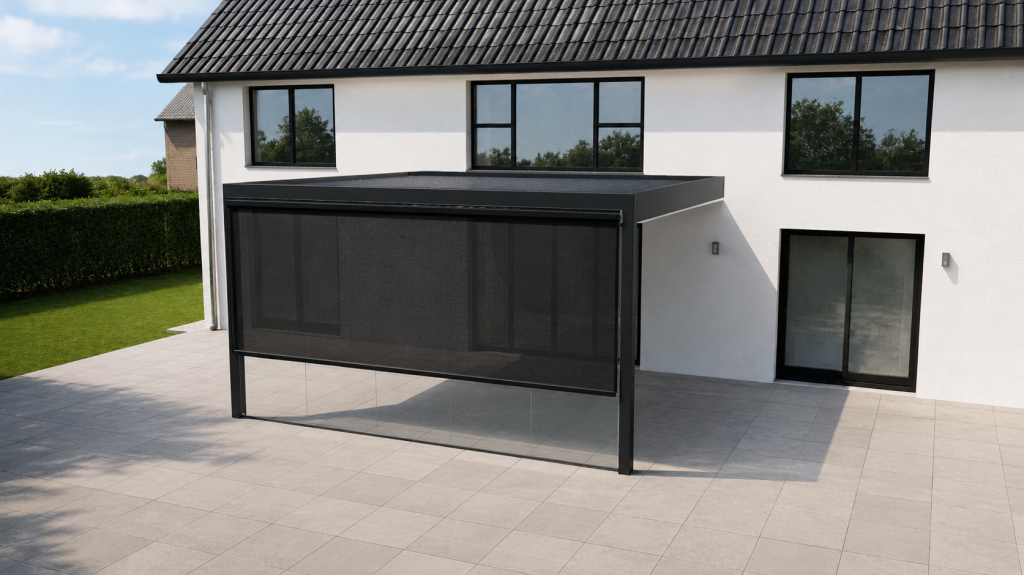
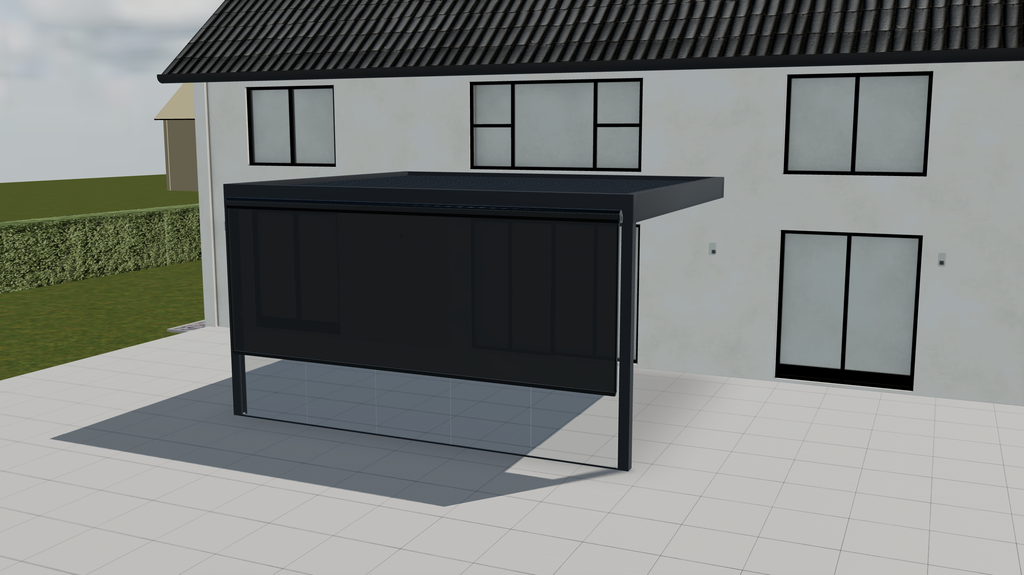
Configurix can bring these choices into a single interactive 3D workflow while connecting them with pricing and quotation logic. Its pergola configurator supports live adjustment of dimensions, materials and options, with the configuration feeding an accurate price and commercial proposal.
This matters enormously during an on-site sales appointment.
Instead of measuring the space, returning to the office, producing a drawing, checking a spreadsheet, preparing a quote and sending everything days later, a salesperson can work through the design with the customer while interest is still high.
The customer sees the pergola taking shape.
The salesperson sees the commercial effect of every choice.
The business keeps a structured configuration rather than a collection of handwritten notes.
That is a much stronger sales workflow.
Configurix also supports AR-style visualization for outdoor products, allowing a configuration to be viewed in the customer’s environment, alongside measurement, planning and quotation capabilities.
For pergola manufacturers and installer networks, this combination of 3D + product rules + pricing + quoting + dealer workflow is where Configurix becomes particularly compelling.
Configurix for Veranda and Glass-Roof Configurators
Verandas create an even greater configuration challenge.
Dimensions affect roof geometry. Roof pitch influences the structure. Glazing options affect appearance and cost. Sliding doors, side walls, ventilation and drainage can all interact.
A generic 3D tool can show a veranda.
A specialist configurator needs to understand how a veranda works.
Configurix allows veranda sellers to configure elements such as dimensions, frames, glazing, roof systems, side elements and finishes in real time while connecting the project to pricing and quotation output.
This transforms the customer conversation.
Instead of saying:
“This is approximately what your veranda will look like.”
the salesperson can move toward:
“This is your selected veranda, at your dimensions, with your glazing, frame colour, openings and options—and here is the corresponding quotation.”
That is a fundamentally stronger buying experience.
It also reduces one of the biggest problems in custom construction sales: information being recreated at every stage.
When design data, pricing and the project record remain connected, there is less room for somebody to manually interpret the salesperson’s notes later.
Configurix for Door Configurators
Doors appear simple until you model the actual product rules.
A configurable entrance door may involve opening dimensions, frames, thresholds, single or double leaves, pivot systems, sidelights, toplights, panels, glazing, handles, locks, security packages and finishes.
And many combinations are conditional.
A particular handle may not work with a certain lock.
A certain panel may only be available within specified dimensions.
A sidelight may change the total opening.
A finish may carry a surcharge.
A glazing option might only be available for certain constructions.
Configurix models doors as complete configurable systems rather than collections of colour swatches. Its door platform can connect dimensions, frames, leaves, panels, glazing, hardware and finishes with rules, live commercial data and quotations.
This is an important distinction when comparing it with simpler online door designers.
A visualizer asks:
“What should the door look like?”
A serious door configurator asks:
“What valid door can we manufacture, at these dimensions, with these components, at this price?”
Configurix is built around the second question.
And although companies such as Threekit also offer sophisticated door-specific 3D configuration and dynamic dimensions, Configurix’s broader connected workflow—from configuration through quotation and project management—is particularly attractive for manufacturers, dealers and installers that want fewer separate systems.
Configurix for Window Configurators
Windows are one of the most technically demanding products to configure correctly.
A true window configurator needs to understand more than frame colour and glass type.
It may need to account for:
- overall opening dimensions;
- frame systems;
- sash layouts;
- fixed and opening sections;
- mullions and transoms;
- inward or outward opening;
- handing;
- glazing packages;
- hardware;
- handles;
- sills;
- screens;
- shutters;
- performance requirements;
- accessories;
- account pricing;
- and manufacturing restrictions.
Configurix’s window configurator is designed around this complete system. It connects frame geometry, sash layouts, handing, glazing, hardware, sills, screens and shutters within the same project, while supporting pricing, quotes, schedules and potential BOM or order handoffs.
This can be especially valuable to window manufacturers working through dealer networks.
Rather than teaching every salesperson and dealer every technical restriction in the catalogue, the rules can be built into the configuration experience.
The configurator becomes a form of digital product knowledge.
If an option cannot be manufactured, it should not simply be left for somebody in engineering to discover after the quotation has already been sent.
The system can guide users toward valid combinations earlier in the process.
That means fewer errors, less back-and-forth and a cleaner path from customer choice to approved order.
Configurix for Kitchen 3D Configurators
Kitchen configuration introduces a different form of complexity.
Unlike a door, which exists mainly inside a defined opening, a kitchen configurator needs to understand both the room and the products placed inside it.
Walls matter.
Corners matter.
Doors and windows matter.
Cabinet dimensions matter.
Worktop continuity matters.
Appliance sizes matter.
Clearances matter.
The relationship between individual units matters.
Configurix supports fitted, modular and made-to-measure kitchen systems, connecting room dimensions, cabinet runs, corners, worktops, appliances, finishes and commercial rules in a guided 3D kitchen project. The same project can remain connected to pricing, quotations and optional BOM or order data.
That creates an important advantage over kitchen planners that exist primarily as visualization or inspiration tools.
For a professional kitchen retailer or manufacturer, beautiful rendering is only the start.
The real objective is to turn a customer’s design into a configuration that can be priced, quoted, approved and ultimately supplied.
The more of those steps that remain inside one connected system, the less duplicate work the business needs to perform.
One of Configurix’s Biggest Advantages: One Platform Across Product Categories
Many manufacturers and installers do not sell only one product.
A company might sell pergolas, verandas, sliding glass walls and awnings.
Another might offer windows, entrance doors and garage doors.
A home-improvement business could sell garden rooms, outdoor kitchens, carports, glazing systems and shading.
This is where operating multiple specialist applications becomes expensive and frustrating.
Each application may have its own login, customer records, quote templates, price tables and product database.
Configurix takes a broader approach.
Its platform is designed to support multiple product families while allowing each catalogue to retain its own dimensions, product structure, options, pricing rules and output requirements. It can also support differences in branding, language, currencies, tax, permissions and catalogues across brands and markets.
For multi-product manufacturers and dealer groups, that may be one of the strongest reasons to choose Configurix.
One business does not necessarily need five unrelated configurators.
It can build multiple selling experiences on a common commercial platform.
Real-Time Pricing Turns 3D Into a Sales Tool
There is another major distinction between a 3D visualization experience and a true sales configurator: price.
Customers do not only want to know what something looks like.
They want to know what it costs.
When a customer adds motorized screens to a pergola, upgrades the glazing on a veranda or chooses more expensive hardware for a door, Configurix can connect those decisions to pricing rules.
That changes the psychology of the sale.
Options become tangible.
The salesperson can demonstrate an upgrade and immediately explain its commercial impact.
The buyer can adjust the configuration to fit the budget.
And the business is less dependent on somebody manually rebuilding the configuration inside a spreadsheet after the meeting.
Configurix supports itemized pricing, option and accessory pricing, margin controls and discount rules as part of its CPQ functionality.
The Quote Comes From the Configuration
Quotation is another area where configurators often break down.
The customer creates something beautiful in 3D.
Then the salesperson starts again in another system.
They manually type dimensions.
They manually add products.
They copy prices.
They attach screenshots.
Every manual transfer creates another opportunity for error.
Configurix is designed so that the commercial quote remains connected to the configuration.
The platform can generate branded quotation documents while carrying product visuals and dimensions from the configured project.
That sounds like a small workflow improvement.
At scale, it can be enormous.
If a business produces hundreds or thousands of quotes every month, removing even a few minutes of repetitive administration from each project can represent a significant operational improvement.
Configurix Connects Marketing, Sales and Operations
Perhaps the clearest way to understand Configurix is to stop thinking of it purely as “3D software.”
It is better understood as a digital product-selling system.
The 3D configurator attracts and educates the customer.
The product rules control what can be selected.
CPQ calculates the commercial result.
Lead capture identifies the prospect.
CRM keeps the opportunity moving.
Quotation turns the configuration into a proposal.
Project and order data carry the approved product further through the business.
Configurix currently presents these capabilities as one connected platform covering 3D configuration, CPQ, automated quotes, website lead generation, CRM and project delivery.
That all-in-one philosophy is central to its competitive positioning.
Configurix vs Expivi, Threekit and Epicor CPQ
Configurix should not be positioned as if its major competitors are weak.
They are not.
Expivi is a powerful API-first platform combining 3D configuration, Visual CPQ, quoting and integration capabilities.
Threekit has substantial strength in visualization, 3D, AR, AI-guided selling, configuration and digital commerce.
Epicor CPQ is particularly strong in complex manufacturing workflows, engineering automation and ERP-connected environments.
So why choose Configurix?
Because the best software is not always the platform with the longest feature list.
It is the platform that fits the business problem.
For manufacturers, installers and dealer networks selling doors, pergolas, verandas, windows, kitchens and other made-to-measure products, Configurix’s specialization can mean that the system is designed around the decisions these businesses actually make every day.
Widths.
Heights.
Openings.
Bays.
Roof systems.
Glazing.
Profiles.
Cabinets.
Hardware.
Accessories.
Dealer pricing.
Installation.
Quotations.
Projects.
Those aren’t edge cases for Configurix.
They are the core use case.
Why Specialization Matters
Generic software asks a company to adapt its product to the platform.
Industry-focused software attempts to adapt the platform to the product.
That difference becomes increasingly important as product complexity grows.
A simple T-shirt configurator may only need size, colour and artwork.
A €20,000 veranda or made-to-measure window system can involve dozens of dependent commercial and technical decisions.
The configurator therefore has to represent reality.
If the visual model says one thing, the quotation says something else and production receives a third interpretation, the technology has failed.
Configurix is built around keeping these stages connected to one governed product configuration.
That is arguably its most important advantage.
Better for Customers. Better for Sales Teams. Better for Manufacturers.
From the customer’s perspective, Configurix makes complex products easier to understand.
Instead of imagining the finished product from technical descriptions, customers can interact with it visually.
From the salesperson’s perspective, it makes complex products easier to sell.
Instead of switching between brochures, spreadsheets, CAD files and quotation software, more of the conversation can happen inside one system.
From the manufacturer’s perspective, it makes the sales process easier to control.
Product rules can govern what is offered, while structured configuration information can continue downstream.
And from a dealer-network perspective, it gives different sellers a more consistent way to configure and quote the manufacturer’s catalogue.
This combination is what turns 3D configuration from a marketing feature into business infrastructure.
The Future of Product Configuration Is Connected
3D configurators are evolving quickly.
The first generation was about visualization.
The next generation is about connection.
The visual model must connect to product rules.
Product rules must connect to pricing.
Pricing must connect to quotations.
Quotations must connect to customers and projects.
Approved projects must connect to orders and production.
Configurix has built its platform around that direction.
For businesses selling configurable doors, windows, pergolas, verandas and kitchens, this is particularly important because every project combines a customer’s visual decision with technical and commercial constraints.
The winner in this market will not simply be the company producing the nicest 3D render.
It will be the company that most effectively turns that 3D configuration into a valid, priced and deliverable product.
And that is where Configurix makes its strongest case.
Conclusion: Why Configurix Has a Competitive Edge
Configurix competes in a market containing sophisticated platforms including Expivi, Threekit and Epicor CPQ.
Its competitive advantage comes from bringing the pieces together around the industries it serves.
Real-time 3D visualization.
Parametric product configuration.
Product and compatibility rules.
Live CPQ pricing.
Professional quotations.
Website lead generation.
CRM and sales follow-up.
Dealer and multi-market workflows.
Project, order and production handoffs.
And critically, all of these capabilities can be applied across products such as doors, windows, pergolas, verandas and fitted or outdoor kitchens rather than forcing a business to operate a separate technology stack for every product category.
For a manufacturer looking for highly customizable Visual CPQ at enterprise scale, there are several strong platforms worth evaluating.
But for businesses that specifically want to turn made-to-measure building and home-improvement products into an integrated visual sales experience, Configurix offers a particularly compelling proposition: configure it, see it, price it, quote it and move it toward production without losing the product definition along the way.
That is more than a 3D configurator.
It is a better way to sell configurable products.